Black Amber Strain: The Complete Guide
TL;DR
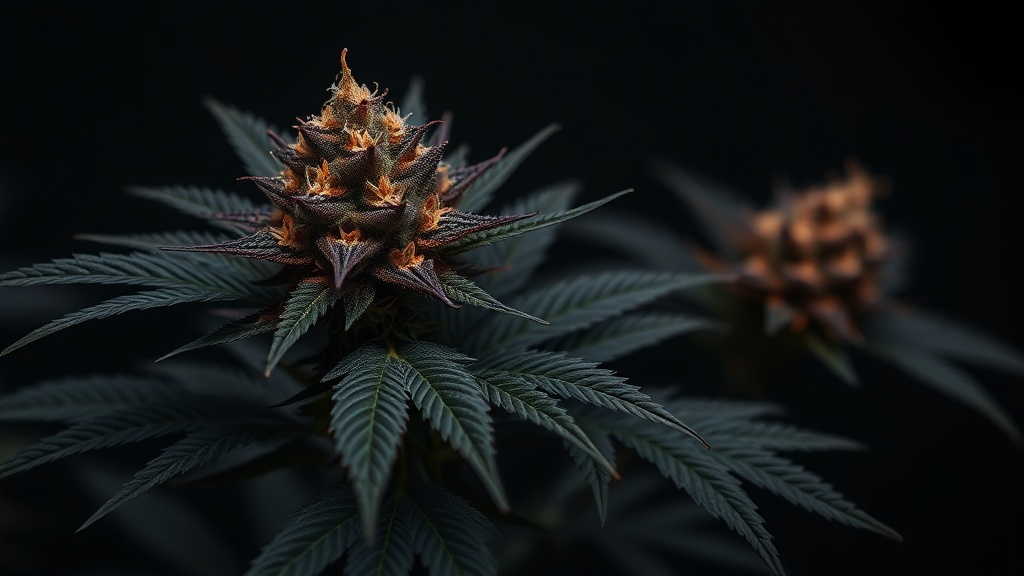
Black Amber is an indica-dominant hybrid from Fullmoon Genetics, bred by crossing GMO and OZ Kush BX2. It delivers a deep, sedating body high wrapped in a funky hash-and-diesel aroma. THC typically runs 21–32%, making it one of the heavier hitters in its class. Flowering time is 8–9 weeks indoors, with yields of 400–500g/m² inside and up to 600g per plant outdoors. Best suited for evening use and experienced consumers.
What Is Black Amber?
Black Amber is a strain that commands attention the moment you open the jar. Developed by Fullmoon Genetics, it's the result of crossing two genetic heavyweights: GMO (also known as Garlic Mushroom Onions) and OZ Kush BX2. The outcome is an indica-dominant hybrid that leans hard into the sedating, full-body relaxation that Kush genetics are known for, while GMO contributes its signature funky, gassy depth. One reviewer put it plainly: Black Amber "actually made me look up a weed strain for the first time." That's a strong endorsement from someone who didn't think they needed to go further.
The name suits it — sessions with Black Amber tend to feel like being slowly enveloped in warm, dark resin. It's thick, rich, and deliberate. This isn't a strain you reach for before a morning hike. It's an end-of-day strain that earns its place in the rotation through sheer depth of experience.
Black Amber Terpene Profile
Three dominant terpenes define Black Amber's character. Understanding them helps you anticipate both the flavor and the effect ceiling.
- Myrcene — The dominant terpene, responsible for the earthy, musky base that underpins the whole aroma. Myrcene also enhances THC absorption and drives the sedating, couch-lock dimension of the high. If you've smelled classic Kush or Bubba Kush, you already know this character.
- Beta-Caryophyllene — Adds a spicy, peppery kick that cuts through the earthiness and provides a pungent gassiness. Caryophyllene also binds to CB2 receptors, contributing anti-inflammatory effects that make Black Amber appealing for physical discomfort.
- Limonene — The lighter note in an otherwise heavy terpene stack. It softens the profile with subtle citrus brightness, moderates the heaviness slightly, and contributes to the mood-lifting, anti-anxiety layer that keeps this strain from feeling purely oppressive.
Together, these three create an aroma that users consistently describe as "spicy gassy diesel" layered over "rich hash" — complex, unmistakable, and instantly recognizable as a serious cannabis. For a deeper dive into how these terpenes work, visit our Complete Guide to Cannabis Terpenes or explore the interactive Terpene Explorer.
Black Amber Effects
Black Amber sits firmly in the evening-use category. The GMO side delivers a cerebral onset — focused and quietly euphoric — before the OZ Kush BX2 genetics pull everything downward into a warm, total-body relaxation. Users report a "deep molasses-like haze" that builds gradually rather than hitting all at once. That slow onset is deceptive: new users often underestimate the final intensity.
Positive Effects
- Focused — The initial head clarity is real, even if brief. Good for creative work in the first 30–45 minutes.
- Relaxed — The dominant destination. Muscle tension dissolves progressively.
- Euphoric & Uplifted — Mood elevation is consistent, keeping the sedation from feeling gloomy.
- Creative — Some users find a meditative creative window before the body stone fully takes over.
Who It's Best For
Among reported user cases, 37% use Black Amber for anxiety relief, 20% for depression, and 12% for stress. The beta-caryophyllene and limonene combination likely drives the anxiolytic response. If anxiety is your primary target, check our Top Cannabis Strains for Anxiety Relief for a broader comparison. For sleep-related use, it also appears in our Best Cannabis Strains for Sleep (2026) roundup — the myrcene-forward profile makes it a logical candidate for insomnia.
Black Amber Cannabinoid Profile
THC numbers for Black Amber vary significantly by batch and source. Dispensary testing typically shows 21% THC on the lower end, while premium top-shelf batches from verified Fullmoon Genetics stock can reach 30–32%. CBD sits below 1% in all tested samples. This is a high-THC strain with no meaningful CBD buffer — dose accordingly if you're sensitive to THC.
If you want to understand what those cannabinoid numbers actually mean in terms of potency, our Cannabis Testing: The Complete Guide breaks down how labs measure and report cannabinoids.
Flavor & Aroma
Black Amber doesn't do subtle. Break a nug and you get immediate diesel fuel and garlic funk (the GMO parent asserting itself), followed by a rich hash note that gives the strain its name — that deep amber resin quality. On the exhale, there's a slight sweetness and pepper that rounds it out. It's a polarizing profile: if you love "gas" strains, this is deeply satisfying. If you prefer fruity or sweet profiles, it may be an acquired taste. For context on what makes gas strains distinct, see our Gas Weed: The Complete Guide.
Growing Black Amber
Key Stats at a Glance
| Parameter | Detail |
|---|---|
| Flowering Time | 8–9 weeks (indoor) |
| Outdoor Harvest | Mid to late October |
| Indoor Yield | 400–500 g/m² |
| Outdoor Yield | Up to 600 g/plant |
| Plant Type | Indica-dominant, compact-to-medium height |
| Difficulty | Intermediate |
Environment & Climate
Black Amber's indica genetics mean it grows stocky and dense — excellent for indoor setups with height restrictions. Keep daytime temperatures between 68–80°F (20–27°C) and relative humidity at 40–50% during flowering to prevent bud rot in those thick colas. Dense buds with heavy resin coverage are prime targets for Botrytis, so airflow is non-negotiable. Oscillating fans and a proper exhaust setup will protect your investment.
Training Techniques
Given its tendency toward compact branching, Black Amber responds well to low-stress training (LST) during veg to open up the canopy and improve light penetration. Topping at node 4–5 is effective for creating multiple colas and maximizing the 400–500 g/m² potential. If you're running a SCROG setup, flip to flower once the net is 70% filled — this strain fills out aggressively. For topping technique specifics, see How to Top Cannabis Plants Multiple Times.
Feeding
Black Amber is a moderate-to-heavy feeder in flowering. Push phosphorus and potassium from week 3 of flower onward to support the dense bud structure. Watch for any signs of nutrient burn — with high-EC feeds, the tips will tell you quickly. Our Nutrient Deficiency Identifier can help you diagnose any mid-grow issues, and the Cannabis Nutrient Deficiency Chart Guide is a solid visual reference.
Try the Nutrient Deficiency Identifier →
Harvest Timing
Harvest at 8 weeks for a slightly more cerebral result; push to 9 weeks for peak sedation and maximum amber trichome development. Use a jeweler's loupe or digital microscope. At 9 weeks you want to see roughly 70% cloudy, 20–30% amber trichomes for the full Black Amber experience. Our When to Harvest Cannabis: Trichome Guide walks through this in detail.
After harvest, don't rush the dry. A 10–14 day slow dry at 60°F / 60% RH followed by a 4–8 week cure is what takes Black Amber's hash-and-diesel aroma from good to exceptional. Use our Dry & Cure Timer to set your schedule and hit the right windows.
Yield Estimation
To estimate your actual return before you start — accounting for your grow space, light output, and training method — run your numbers through the Yield Calculator. Outdoor growers hitting 600g per plant need full-season sun exposure in a Mediterranean or comparable climate with warm, dry falls.
Black Amber vs. Similar Strains
If you're deciding between Black Amber and other heavy indica hybrids, here's how it stacks up against close relatives:
- Black Amber vs. GMO — GMO is sharper and more cerebrally stimulating. Black Amber is the more sedating, body-focused version of that genetic line.
- Black Amber vs. Biscotti — Biscotti is sweeter and more balanced; Black Amber is rawer and gassier with a heavier body effect.
- Black Amber vs. Venom OG — Both are indica-dominant heavyweights, but Venom OG skews more piney and earthy where Black Amber goes diesel-hash.
For a direct side-by-side comparison with any strain in our database, use the Strain Comparator.
Is Black Amber Right for You?
Black Amber is purpose-built for users who want a potent, sedating, full-body indica experience without sacrificing complexity of flavor. It's a grower's strain too — the genetics are stable enough to reward proper technique with serious yields and exceptional resin production. If you're new to cannabis or sensitive to high-THC products, approach with respect: start with a small dose and give it 15–20 minutes before going back for more. Not sure where to start? Take the Strain Finder Quiz for personalized recommendations based on your experience level and desired effects.
For those dealing with chronic anxiety, depression, or pain, Black Amber has a strong user-reported track record — but it pairs best with sedating-effect tolerance already established. New to medical cannabis? See our Best Strains for Depression and Anxiety guide for a broader view of where Black Amber fits.
More from StrainGuide
Have a question about this topic?
Ask our AI Bud Tender — powered by the same assistant in the StrainGuide app.