Black Ruby Rose Cannabis: Black Rose & Ruby Rose Strain Guide
TL;DR
Black Ruby Rose is not a recognized cannabis strain — no breeder has officially released a cultivar by that name. What does exist are two closely related floral strains: Black Rose (an indica-dominant hybrid with ~16% THC, earthy berry flavors, and a caryophyllene-heavy terpene profile) and Ruby Rose (a more potent hybrid hitting 18–22% THC with linalool-forward florals and a citrus-lime brightness). Ruby Rose is actually a direct descendant of Black Rose, making the "Black Ruby Rose" search make a lot of sense — you're essentially looking at a parent-child lineage. This guide breaks down both strains in full so you can decide which one fits your session.
What Is "Black Ruby Rose" Cannabis?
If you've been searching for black ruby rose weed and coming up empty at dispensaries or seed banks, that's because no licensed breeder has released a strain under that exact name as of 2026. It's likely a mashup of two very real, very distinct strains that share deep genetic and aesthetic ties: Black Rose and Ruby Rose. The confusion is understandable — Ruby Rose was bred directly from Black Rose stock, so the lineage runs like a dark, floral thread through both cultivars. Think of it as searching for a specific chapter in a book you're already holding.
Rather than dismiss the search, this guide takes the smarter approach: profiling both strains in detail so you walk away knowing exactly what you're getting with each one, how they compare side-by-side, and which is worth growing or sourcing.
Black Rose: The Dark Indica Foundation
Genetics & Background
Black Rose is an indica-dominant hybrid created by crossing Black Russian with Purple Shiva Skunk. That parentage tells you a lot immediately: Black Russian brings deep body sedation and earthy berry darkness, while Purple Shiva Skunk adds resinous density, a floral edge, and classic Skunk backbone. The result is a strain that leans heavily toward physical relaxation without fully putting you to sleep.
THC, CBD & Potency
Black Rose tests at approximately 16% THC with CBD hovering around 0.1%. That's a moderate potency sweet spot — approachable for intermediate users, not overwhelming for experienced ones looking for a functional evening strain. Don't let the 16% fool you; the indica-dominant genetics punch above their weight in terms of body effect.
Terpene Profile
The dominant terpene in Black Rose is caryophyllene, followed by notable amounts of humulene and myrcene. Caryophyllene is the only terpene that also acts as a cannabinoid receptor agonist (specifically CB2), which explains the strain's reputation for targeted body relaxation and mild anti-inflammatory effect. Humulene adds a woody, hoppy bite, while myrcene deepens the sedative, earthy character. To learn more about how these compounds work, check out our Complete Guide to Cannabis Terpenes.
Flavor & Aroma
Black Rose delivers a rich bouquet of crushed berries, rose petals, and damp earth. On the exhale there's a subtle spiced woodiness from the caryophyllene/humulene combination. It's not a loud, in-your-face terp bomb — it's more layered and elegant, like the name implies. Perfect for slow evenings when you want complexity, not chaos.
Effects
Expect a calming, body-relaxing high that elevates mood without dragging you into couch-lock. Black Rose is a genuinely functional indica — you can still hold a conversation, watch a film, or wind down with music. It's a solid option if you're looking for sleep support without total sedation.
Ruby Rose: The Potent Offspring
Genetics & Background
Ruby Rose was developed by Second Generation Genetics and is a direct descendant of Black Rose, crossed with F13 #5. F13 is a legendary sativa-leaning cut known for its euphoric, cerebral lift and complex floral-citrus aromatics. The result of crossing it into Black Rose is a cultivar that inherits the dark floral base but amplifies it with brightness, potency, and a more dynamic effect arc. This is the strain that most closely matches what someone searching for black ruby rose cannabis is probably picturing in their head.
THC, CBD & Potency
Ruby Rose is meaningfully more potent than its parent, testing between 18% and 22% THC with CBD below 1%. The F13 influence pushes the ceiling considerably — this is a strain that experienced users will feel quickly, and newcomers should approach with a single measured hit first. Use our Dosage Calculator if you're unsure where to start.
Terpene Profile
Ruby Rose swaps Black Rose's caryophyllene dominance for a linalool-forward profile, with prominent humulene and terpinolene rounding it out. Linalool is the terpene most associated with lavender — it's calming, mildly anxiolytic, and adds the distinctly floral character Ruby Rose is celebrated for. Terpinolene brings a fresh, slightly piney brightness that lifts the whole profile. Use our Terpene Explorer to dig deeper into how linalool and terpinolene interact.
Flavor & Aroma
Where Black Rose is earthy and brooding, Ruby Rose is bright and expressive. Expect sweet rose and ripe berry on the front end, with a citrus-lime sparkle mid-palate and subtle earthy undertones finishing the experience. It's a genuinely elegant smoke — the kind of strain you'd use to introduce skeptical friends to the idea that cannabis can smell and taste beautiful.
Effects
Ruby Rose opens with an uplifting, euphoric onset that transitions smoothly into a relaxed body state — without the couch-lock that heavier indicas produce. The linalool keeps anxiety at bay while the terpinolene adds a cerebral freshness. It's a well-balanced ride from first hit to final fade, making it equally suited to creative afternoon sessions or unwinding after work. If you're comparing this to other mood-lifting options, our guide on best weed strains for depression 2026 has useful context.
Black Rose vs Ruby Rose: Side-by-Side Comparison
| Feature | Black Rose | Ruby Rose |
|---|---|---|
| Genetics | Black Russian × Purple Shiva Skunk | Black Rose × F13 #5 |
| THC | ~16% | 18–22% |
| CBD | ~0.1% | <1% |
| Dominant Terpene | Caryophyllene | Linalool |
| Flavor | Berries, rose, earth | Sweet rose, citrus, ripe berry |
| Primary Effect | Body relaxation, mild mood lift | Euphoria → relaxed, no couch-lock |
| Flowering Time | ~63 days | 56–63 days |
| Best For | Evenings, stress relief, sleep prep | Afternoons, mood boost, social use |
Growing the Black Ruby Rose Lineage
Growing Black Rose
Black Rose flowers in approximately 63 days and suits growers who are comfortable managing indica-dominant plants. Expect moderately compact growth with dense, resinous buds. The indica structure responds well to low-stress training (LST) or a light defoliation pass at week 4–5 of flower to open up bud sites and improve airflow. Humidity control matters here — the density of the buds makes them susceptible to mold in anything above 55% RH during late flower. If you're new to the grow side, our beginner's guide to growing cannabis indoors is a solid starting point.
Growing Ruby Rose
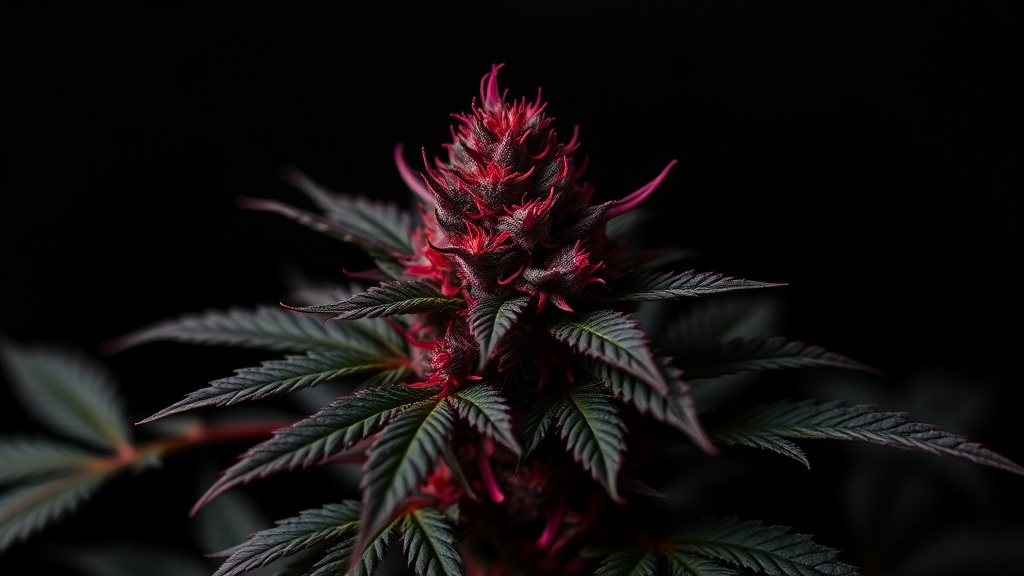
Ruby Rose plants stay compact to medium in height with dark green foliage that may shift toward purple as temperatures drop in late flower — the anthocyanin expression is part of what makes this strain visually stunning at harvest. Flowering time is 56 to 63 days with medium yields. The slightly shorter finish window compared to Black Rose means Ruby Rose can be a good option if you're running back-to-back cycles. As with any linalool-dominant strain, flushing well before harvest and a proper dry-and-cure routine will pay dividends on aroma intensity — use our Dry & Cure Timer to nail the schedule.
Nutrients & Environment
Both strains perform well in coco coir or quality organic soil. Ruby Rose in particular benefits from slightly elevated phosphorus and potassium levels during weeks 4–7 of flower to support its dense, resinous buds. Keep an eye on calcium and magnesium — linalool-dominant strains can show deficiencies under bright LED setups. If you spot any yellowing or leaf curl, run it through our Nutrient Deficiency Identifier before adjusting your feed schedule. For estimating what your crop could yield, our Yield Calculator handles both strains well when you input the right canopy size and light output.
Try the Nutrient Deficiency Identifier →
Who Should Seek Out Black Rose or Ruby Rose?
If your original search for black ruby rose was driven by wanting a floral, dark-fruited indica experience, both strains deliver that in slightly different ways:
- Choose Black Rose if you want a gentler, more approachable 16% THC ride with caryophyllene-driven body relaxation and earthy berry flavors. Great for evenings, stress comedowns, or anyone sensitive to high-potency cannabis.
- Choose Ruby Rose if you want the same floral lineage with more potency (up to 22% THC), a brighter citrus-floral aroma, and an effect arc that starts euphoric before settling into calm relaxation. Better for mood elevation and daytime-to-evening use.
- Grow both if you're a home cultivator who appreciates running a parent-offspring pair — comparing their expression side-by-side is genuinely educational and the visual contrast at harvest (both can show deep purple coloring) is rewarding.
Not sure which fits your preferences? Take the Strain Finder Quiz or use the Strain Comparator to stack Ruby Rose against other floral hybrids in your shortlist. For more in the dark, berry-forward family, the Black Cherry strain guide and Purple Punch guide are worth reading alongside this one.
More from StrainGuide
Have a question about this topic?
Ask our AI Bud Tender — powered by the same assistant in the StrainGuide app.