Black Widow Strain: Effects, 28% THC & Full Terpene Profile
TL;DR
Black Widow is a sativa-dominant hybrid bred by Scott "Shantibaba" Blakey from a Brazilian sativa × South Indian indica cross. It tests between 15–28% THC, delivers a cerebral-forward euphoric high with a body-relaxing finish, and is considered one of the easier strains to grow — yielding up to 450g indoors in 8–10 weeks of flowering. Caryophyllene, limonene, and linalool define its spicy-citrus-floral aroma.
What Is the Black Widow Strain?
The Black Widow strain is one of the most storied sativa-dominant hybrids in cannabis history. It was developed by Shantibaba (Scott Blakey) while he was at Green House Seed Company in the mid-1990s — the same breeder behind White Widow. When Blakey departed Green House in the late 1990s and co-founded Mr. Nice Seed Bank, he renamed his version of the genetics "Black Widow" to clearly differentiate it from the strains remaining under the Green House banner.
The lineage is a cross between a Brazilian sativa landrace and a South Indian indica, giving Black Widow that classic sativa-dominant structure with just enough indica influence to round out the body effect. It's competed in — and won — multiple Cannabis Cups, cementing its reputation well before the modern era of 30%-THC novelty drops.
If you're trying to decide whether Black Widow fits your preferences, our Strain Finder Quiz can point you toward the right match based on your desired effects and tolerance level.
Black Widow Strain Cannabinoid Profile
Black Widow's potency range is notably wide: lab results consistently land between 15% and 28% THC, depending heavily on phenotype, grow conditions, and curing quality. Most commercial cuts sit in the 20–24% range. CBD content is low, typically 0.35–0.65%, so this is not a strain for those seeking a balanced THC:CBD ratio.
| Cannabinoid | Typical Range |
|---|---|
| THC | 15–28% |
| CBD | 0.35–0.65% |
| CBG | Trace |
The high variance in THC is worth taking seriously. A phenotype from a quality indoor grow at 26–28% hits very differently than a 15% outdoor cut. If you're purchasing flower, ask for a lab-tested batch — the number actually matters here.
Black Widow Terpene Profile
Black Widow's terpene composition is one of its most interesting features. Beta-caryophyllene leads at 0.72%, giving the strain its signature peppery, slightly woody bite. Limonene (0.59%) adds brightness and citrus lift, while linalool (0.49%) brings a subtle floral softness that keeps the aroma from tipping into pure gas territory. Terpinolene (0.48%) contributes a piney, herbaceous edge common to classic landrace-influenced genetics.
For a deeper dive into how each of these terpenes affects the experience, see our Complete Guide to Cannabis Terpenes or explore interactively with the Terpene Explorer.
Black Widow Effects: What to Expect
The Black Widow strain's effects follow a recognizable sativa-dominant pattern: a fast-onset cerebral rush that settles into a relaxed, sociable state. The mental lift is the headline — expect euphoria, heightened focus, and a mood elevation that makes this useful for creative work or social situations. The indica heritage prevents it from becoming a racy, anxiety-inducing sativa; instead, there's a comfortable body weight that arrives 20–30 minutes in.
- Euphoria: Fast-acting, often the first sensation within minutes of inhaling
- Relaxation: The dominant reported effect (58% of users), building as the high matures
- Happiness: Consistently reported mood lift (42% of users)
- Focus: Mid-range — good for creative tasks but not laser-focused like a pure landrace sativa
- Body relaxation: Present but not couch-locking at moderate doses
Potential negatives: At higher doses — especially with batches pushing toward 28% THC — some users report dizziness, headache, or paranoia. This is not a strain to jump into at a full dose if you're new to high-THC cannabis. Start with 1–2 hits and wait before redosing. Our Dosage Calculator can help you dial in an appropriate starting point.
Flavor & Aroma Profile
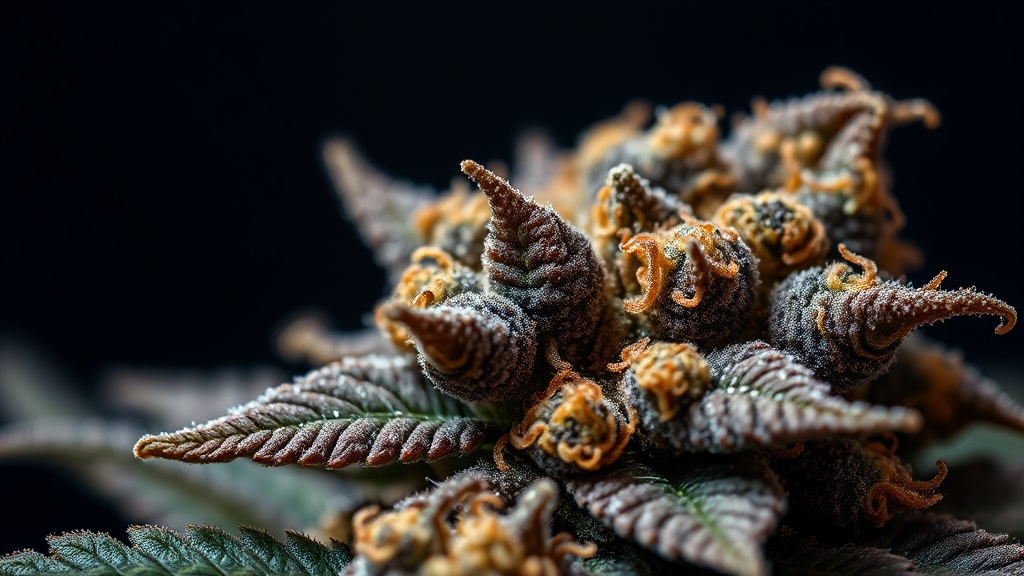
On the nose, Black Widow leads with a spicy, earthy pepper from the caryophyllene base, brightened by citrus from limonene. Break up the bud and the terpinolene-driven pine note becomes more apparent. The linalool adds a faint floral undertone — lavender-adjacent — that becomes more noticeable in the exhale, especially on a clean glass piece.
The overall profile sits in a spicy-citrus-floral triangle. It's not as fruity as modern cookie or runtz lineages, nor as pure-gas as OG derivatives. Classic, complex, and unmistakably old-school sativa-hybrid in character. If you enjoy the terpene overlap, strains like Blue Dream or Amnesia Haze share some of the same sativa-landrace citrus-herbal thread.
Growing the Black Widow Strain
Black Widow is genuinely beginner-accessible. It's pest-resistant, mold-resistant, and tolerates minor mistakes in feeding or temperature without punishing yields severely. That said, there are a few specifics that separate a good run from a great one.
Key Growing Stats
| Parameter | Indoor | Outdoor |
|---|---|---|
| Flowering Time | 8–10 weeks | Late September–October |
| Yield | 350–450g/plant | 300–400g/plant |
| Plant Height | ~1 meter | Up to 2 meters |
| Difficulty | Easy–Moderate | Easy |
Indoor Growing Tips
Indoors, Black Widow stays manageable at around 1 meter — well-suited to tent grows without aggressive training. A light topping at week 3–4 of veg will open the canopy and push more lateral branching, which translates directly into yield. ScrOG setups work well given the plant's moderate stretch during the first 2 weeks of flower.
- Veg time: 4–6 weeks from seedling for indoor grows
- Light schedule: 18/6 veg → 12/12 flower; responds well to 600W HPS or equivalent LED at 35–45 DLI
- Nutrients: Moderate feeder — avoid pushing nitrogen too hard into week 3 of flower or you'll delay terpene development. Use our Nutrient Deficiency Identifier if you see any leaf yellowing early
- Temperature: 70–80°F (21–27°C) lights-on, drop 10°F at lights-off to enhance resin density
- Humidity: Drop to 40–50% RH in flower — Black Widow is mold-resistant but there's no reason to test that claim
Outdoor Growing Tips
Outdoors, Black Widow can stretch to 2 meters and prefers a warm, sunny climate — think Mediterranean, Southern California, or similar. It thrives when given full sun exposure for 8+ hours. The sativa genetics mean it finishes slightly later than most indica-dominant strains, typically ready for harvest in late September to early October in the Northern Hemisphere.
Try the Nutrient Deficiency Identifier →
One notable point for outdoor growers: the aroma intensifies dramatically in the final 2–3 weeks of flowering. The caryophyllene and limonene combination creates a strong, drifting scent that can reach well beyond the garden perimeter. Plan your space accordingly.
Harvest & Post-Harvest
Aim to harvest when trichomes are mostly cloudy with 10–20% amber — this preserves the cerebral sativa character. Waiting for heavy amber will shift the effect toward more sedation and body weight, which goes against what makes Black Widow worth growing. Use a jeweler's loupe or digital microscope to check — our trichome harvest guide walks through the full process.
After harvest, a proper dry and cure is essential for Black Widow's terpene profile to fully express. Target 60–65°F and 55–60% RH during the dry, then jar-cure for a minimum of 3–4 weeks. Use our Dry & Cure Timer to schedule this properly. Rushing the cure is the single most common reason this strain's complex aroma disappoints.
Want to calculate your expected haul before you flip? The Yield Calculator lets you estimate harvest weight based on your setup and plant count.
Black Widow vs. White Widow: What's the Difference?
This question comes up constantly, and the short answer is: same roots, different hands. Both trace back to Shantibaba's original Brazilian × South Indian cross. White Widow stayed under the Green House Seed Company banner; Black Widow is Shantibaba's own release through Mr. Nice Seeds. Phenotypically they share many traits — the frosty resin production, spicy-earthy terpene base, sativa-forward effect profile — but growers and consumers generally report Black Widow as slightly more complex in aroma and a touch more indica-influenced in the body effect, possibly due to selective phenotype work over the years.
You can run a direct side-by-side comparison of both strains using our Strain Comparator.
Who Is Black Widow Best For?
Black Widow is an excellent fit for:
- Experienced sativa fans who want complexity beyond modern candy-forward hybrids
- Creative users looking for daytime motivation without edge or anxiety (at sensible doses)
- Growers who want results without a steep learning curve — the mold and pest resistance makes it forgiving
- Medical users seeking mood elevation and stress relief — the euphoria + relaxation combination is well-documented
It's less ideal for pure beginners to cannabis due to the high ceiling on THC, and not the right call for anyone specifically seeking sedation or nighttime use — check our best strains for sleep guide if that's your goal. If anxiety management is your primary target, the sativa dominance can be a double-edged sword — see our best strains for anxiety roundup for lower-risk alternatives.
Final Verdict
The Black Widow strain has earned its longevity. In an era of endlessly churned novelty genetics, a strain that wins Cannabis Cups in the 1990s and still draws serious grower attention in 2026 is saying something. The 15–28% THC range covers a wide field — a well-grown indoor cut at the top end is genuinely potent — while the caryophyllene-limonene-linalool terpene combination gives it a flavor profile that modern ultra-sweet hybrids can't replicate. If you're growing it, the forgiving structure and strong mold resistance make it a reliable producer. If you're consuming it, respect the potency ceiling and you'll get one of the most well-rounded sativa-dominant experiences available in classic cannabis genetics.
More from StrainGuide
Community Grows
See how real growers are cultivating this strain.
Track Your Grow with GrowGuide
Free grow journal app — log feedings, track stages, snap progress photos, and connect with growers.
Get GrowGuide FreeHave a question about this topic?
Ask our AI Bud Tender — powered by the same assistant in the StrainGuide app.