Peanut Butter Cup Strain: Effects, THC%, Flavor & Grow Tips
TL;DR
Peanut Butter Cup is an indica-dominant hybrid crossing Do-Si-Dos and Peanut Butter Breath, delivering 24–28% THC with a rich nutty, chocolatey, and earthy flavor profile. Expect deep body relaxation, a warm euphoric head high, and serious munchies. It's a moderately challenging grow that rewards patience with dense, resinous buds. Best suited for evening use.
What Is the Peanut Butter Cup Strain?
The Peanut Butter Cup strain is one of those rare cultivars that genuinely lives up to its name. Crack open a jar and the scent hits like a Reese's wrapper — roasted nuts, dark chocolate, and a grounding earthiness that tells you exactly what you're in for. Bred by crossing Do-Si-Dos with Peanut Butter Breath, this indica-dominant hybrid inherits the best of both worlds: the body-melting depth of Do-Si-Dos and the creamy, nutty finish that Peanut Butter Breath is known for.
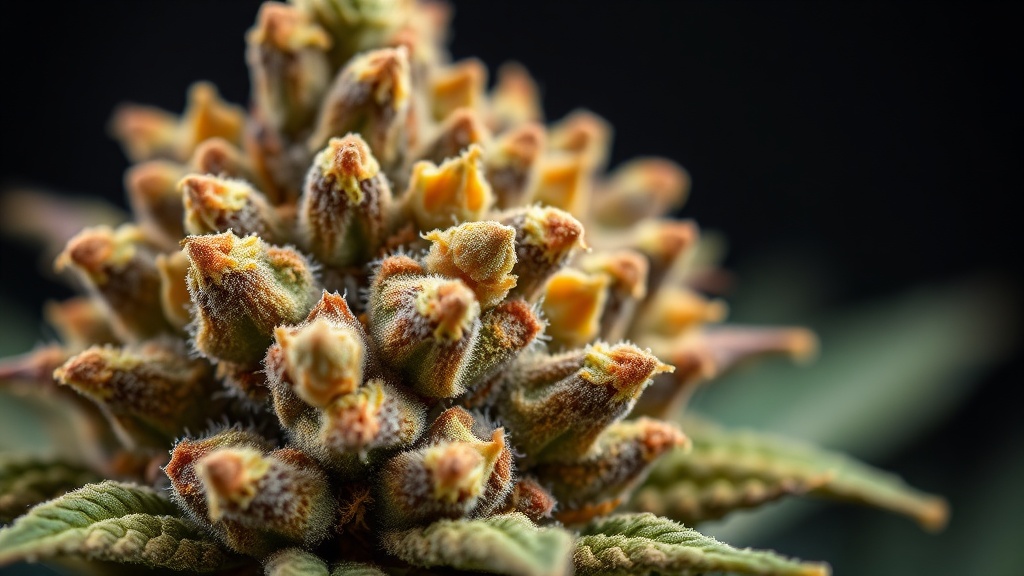
With THC levels consistently testing between 24–28%, Peanut Butter Cup is not a casual Tuesday strain — unless your Tuesday is completely clear. The high is long-lasting, the flavors are genuinely unique in the cannabis world, and the bag appeal is outstanding, with deep green buds frosted in trichomes that sometimes show purple and amber hues late in flower.
Peanut Butter Cup Strain Lineage & Genetics
Do-Si-Dos brings the Girl Scout Cookies and Face Off OG genetics — dense structure, heavy resin production, and that classic cookie-dough earthiness. Peanut Butter Breath (itself a cross of Do-Si-Dos and Mendo Breath F2) adds the roasted, nutty, almost savory note that defines Peanut Butter Cup's flavor fingerprint.
The result is a strain that leans indica (roughly 70/30), with a cannabinoid and terpene stack built for relaxation. Some breeders have released their own variations — including versions using Thin Mint GSC as a parent — so phenotype expression can vary slightly between seed runs and clones. Always source from a reputable breeder and check lab results when possible.
Peanut Butter Cup Terpenes & What They Mean
Caryophyllene leads the profile — this spicy, peppery terpene is the only one known to interact directly with CB2 receptors, contributing anti-inflammatory and stress-relieving effects beyond just aroma. It's a big reason Peanut Butter Cup feels physically soothing rather than just sedating. For a deep dive into what terpenes like this do, check out our complete guide to cannabis terpenes.
Myrcene follows close behind, reinforcing the earthy, musky base and amplifying the sedative quality of THC — this is the terpene most responsible for couch-lock potential. Limonene adds a slight brightness that keeps the high from feeling too flat or oppressive, contributing the faint citrus-cream note in the aftertaste. Linalool brings a subtle floral edge and further calming properties, while humulene (also found in hops) reinforces the earthy, slightly hoppy depth of the flavor.
Together, this stack creates what many describe as a "dessert terp bomb" — simultaneously rich, grounding, and sweet without being saccharine. Use our Terpene Explorer to dig deeper into how each of these compounds interact.
Effects: What Does the Peanut Butter Cup Strain Feel Like?
The Peanut Butter Cup strain high opens with a warm, pressure-behind-the-eyes euphoria that settles in fast — usually within 5 minutes of smoking. It's not racy or anxious; it's the kind of head high that makes everything feel slightly softer and more pleasant. Conversations flow easily, music sounds better, and your to-do list stops feeling urgent.
From there, the body takes over. Around the 20–30 minute mark, a wave of physical relaxation moves from the shoulders down, and most users find themselves gravitating toward the couch. At higher doses (or for lower-tolerance users), this slides into full sedation. Munchies are consistent and intense — keep snacks nearby.
Reported Effects at a Glance
- Euphoria — warm, sustained, not overwhelming
- Body relaxation — heavy limbs, muscle tension release
- Munchies — reliably strong appetite stimulation
- Sedation — common at moderate-to-high doses; great for insomnia
- Stress relief — caryophyllene + myrcene combination works fast
Medical & Wellness Uses
Peanut Butter Cup is popular among medical users targeting chronic pain, insomnia, and anxiety. Its caryophyllene-heavy profile gives it solid anti-inflammatory credentials, and the deep body relaxation makes it a go-to for muscle tension and physical stress. Those using cannabis for sleep should note that the high winds down into genuine drowsiness — this is legitimately one of the better strains for nighttime use. See our roundup of best weed for sleep for how it stacks up against other options.
Potential Downsides
- Dry eyes and dry mouth — common at 24%+ THC; hydrate well
- Couch-lock — not a daytime strain unless productivity is off the menu
- Paranoia risk for very low-tolerance users; start with 0.3–0.5g
- Heavy munchies — food security is your responsibility
If you're unsure how much to consume, especially with edibles made from this strain, use our Dosage Calculator to dial in an appropriate starting point.
Flavor & Aroma Profile
This is where the Peanut Butter Cup strain earns its name unconditionally. The dry smell is roasted peanuts — not artificial peanut flavoring, but the actual warm, slightly oily scent of freshly ground nut butter. Underneath that sits dark chocolate, earth, and a faint sweetness reminiscent of vanilla. When you break the buds apart, a slightly spicy, diesel-adjacent note emerges from the caryophyllene, cutting through the richness.
On the exhale, expect a smooth, creamy smoke with a lingering nutty-chocolate finish that makes you understand exactly why this strain has the name it does. It's genuinely one of the more distinctive flavor experiences in the dessert strain category — comparable to strains like Biscotti or Gelato in terms of flavor complexity, but with a more savory, less sweet profile.
Growing the Peanut Butter Cup Strain
Growing the Peanut Butter Cup strain is a moderately challenging project — not ideal as your first grow, but very achievable for anyone with a successful harvest or two under their belt. It inherits the compact, bushy structure of its Do-Si-Dos parent, with short internodal spacing and heavy branching that rewards training.
Key Growing Stats
| Parameter | Detail |
|---|---|
| Genetics | Do-Si-Dos × Peanut Butter Breath (Indica-dominant ~70/30) |
| Flowering Time | 8–9 weeks (indoor); late September to early October (outdoor) |
| Yield (Indoor) | 400–500g/m² under optimized conditions |
| Yield (Outdoor) | 500–600g per plant with full-season growth |
| Height | 60–90cm indoor; up to 130cm outdoor |
| THC | 24–28% |
| Difficulty | Intermediate |
Training & Structure
The dense, bushy growth pattern of Peanut Butter Cup means airflow is your biggest concern. Without training, the lower canopy becomes a humidity trap that invites mold and botrytis — especially late in flower when buds are fat and dense. Aggressive defoliation at weeks 3 and 6 of flower helps significantly.
LST (low-stress training) during veg works well to open up the canopy and create an even top. For more experienced growers, a ScrOG (screen of green) setup maximizes the natural branching structure and pushes yields toward the upper end of 500g/m². Topping once at the 5th node and then LST-ing the resulting lateral branches is the go-to approach here. Our guide on how to top cannabis plants multiple times covers the technique in detail if you need a refresher.
Environment & Feeding
Peanut Butter Cup likes temperatures in the 21–26°C range during lights-on, dropping to 18–20°C at night during late flower to encourage terpene development and potential purple expression from its anthocyanin-rich genetics. Keep relative humidity below 45% during the final 3 weeks of flower — dense buds and high humidity are a recipe for bud rot.
Feed it moderately heavily during the vegetative phase (nitrogen-forward), then transition to a bloom-heavy schedule at flip. This strain responds well to a two-week flush before harvest. Keep an eye on calcium and magnesium — deficiencies are common with this genetics. Our Nutrient Deficiency Identifier is useful for diagnosing issues mid-grow if something looks off.
Try the Nutrient Deficiency Identifier →
Harvest Timing
Don't rush this one. Peanut Butter Cup builds significant resin mass in the final two weeks of flower. Harvesting at 8 weeks will give you a more cerebral effect; waiting the full 9 weeks deepens the body component and maximizes potency and flavor. Check trichomes under magnification — harvest when 70–80% of heads are cloudy with 10–20% amber for the classic indica couch-lock effect. Our trichome harvest guide has a detailed visual breakdown of the stages.
After harvest, a proper dry and cure is essential to preserve those delicate nutty-chocolate terpenes. Use our Dry & Cure Timer to plan your drying and curing schedule precisely.
Peanut Butter Cup vs. Similar Strains
If you enjoy Peanut Butter Cup, a few strains worth exploring:
- Peanut Butter Breath — the parent strain; slightly less THC, similar nutty profile but more balanced mentally
- Do-Si-Dos — heavier cookie-dough flavor, more classic OG body high
- Biscotti — similar dessert terpene category, more gas and spice, slightly more cerebral
- Gelato — sweeter and more citrus-forward but shares the dense bud structure and heavy relaxation
- Donkey Butter — another nutty, butter-forward indica hybrid worth comparing
Want a side-by-side data comparison? Try our Strain Comparator to stack Peanut Butter Cup against any of the above.
Who Should Try Peanut Butter Cup?
The Peanut Butter Cup strain is ideal for cannabis users who:
- Have moderate-to-high THC tolerance and enjoy potent indica-dominant effects
- Want a genuinely distinct flavor experience in the dessert/savory category
- Use cannabis for sleep, pain relief, or end-of-day stress
- Are growing and want a high-resin, high-bag-appeal cultivar with strong terps
It's not the strain for morning sessions, high-productivity workdays, or first-time users. If you're still finding your ideal strain, our Strain Finder Quiz can match you to something better suited to your tolerance and goals.
Final Verdict
Peanut Butter Cup is a standout in the modern dessert strain category — not because of marketing, but because it genuinely delivers on its name with a terpene profile that is as unusual as it is satisfying. At 24–28% THC with a caryophyllene-myrcene foundation, it hits hard, relaxes deep, and tastes exactly like the candy it's named after. Growers willing to manage its humidity and airflow demands will be rewarded with some of the most visually impressive and aromatically complex buds in their garden. Just don't plan anything important for the evening you smoke it.
More from StrainGuide
Track Your Grow with GrowGuide
Free grow journal app — log feedings, track stages, snap progress photos, and connect with growers.
Get GrowGuide FreeHave a question about this topic?
Ask our AI Bud Tender — powered by the same assistant in the StrainGuide app.