Rainbow Strain: Effects, Terpenes, THC% & Flavor Profile
TL;DR
Rainbow is a balanced-to-indica-leaning hybrid known for its vivid fruit-forward flavor, colorful bag appeal, and well-rounded effects that blend euphoric uplift with deep physical relaxation. THC typically ranges from 18–24%, terpenes lean heavily myrcene and caryophyllene, and it's a moderately challenging grow rewarding growers with dense, resin-packed buds. If you're chasing a strain that hits all the sensory notes — taste, smell, visual, and effect — Rainbow delivers.
What Is the Rainbow Strain?
The Rainbow strain is a visually striking, flavor-rich hybrid cannabis variety that has carved out a loyal following among enthusiasts who want more than just raw potency. While multiple breeders have created strains under the "Rainbow" banner — the name sometimes applies to phenotypes of Rainbow Sherbet, Rainbow Runtz, or standalone Rainbow hybrids — the core experience remains consistent: bursting tropical and berry flavors, a kaleidoscopic terpene profile, and effects that feel genuinely balanced rather than one-dimensional.
The most commonly referenced Rainbow genetics trace back to crosses involving Zkittlez and Sunset Sherbet lineage, though some versions incorporate OG Kush or Skunk influences. This genetic versatility is part of why the strain remains popular — different phenos offer slightly different experiences while sharing the same crowd-pleasing DNA.
Rainbow sits in a sweet spot for recreational users who want both a mood lift and body ease, and for medical consumers chasing stress relief without a total couch-lock. It's not the most extreme strain in any single category, which is precisely what makes it so approachable and repeatable.
Rainbow Strain Genetics & Lineage
The most widely grown Rainbow phenotypes descend from:
- Zkittlez — contributes the dense tropical fruit candy aroma and indica body weight
- Sunset Sherbet — adds creamy sweetness, orange citrus notes, and cerebral warmth
- OG Kush (in some versions) — grounds the hybrid with earthy pine depth and potency
The RS11 strain — Rainbow Sherbet #11 — represents one of the most acclaimed phenotype selections from this lineage, bred by Compound Genetics and widely regarded as a benchmark expression of Rainbow genetics at their ceiling. If you want to dig into that specific cut, it has its own dedicated profile worth reading.
For growers sourcing seeds, feminized Rainbow versions are available from several reputable breeders. Check out our guide on Autoflower vs Feminized vs Regular Seeds if you're deciding which seed type suits your setup.
Rainbow Strain: THC%, CBD & Cannabinoid Profile
Rainbow tests consistently in the 18–24% THC range, with most dispensary cuts landing around 20–22%. CBD is generally low (under 1%), making this a THC-dominant strain with minimal cannabinoid complexity beyond the primary cannabinoid. THCV traces appear in some phenos, which may contribute to the clean, energetic edge in the early onset.
| Cannabinoid | Typical Range |
|---|---|
| THC | 18–24% |
| CBD | <1% |
| CBG | 0.3–0.8% |
| THCV (trace) | <0.3% |
At 20%+ THC, Rainbow is suitable for intermediate-to-experienced consumers. Newer users should start with 1–2 puffs and wait — the body component builds over 15–20 minutes and can catch you off guard if you front-load the dose. Use our Dosage Calculator to dial in your ideal starting point.
Terpene Profile
Rainbow's terpene expression is one of its strongest selling points. The dominant terpenes shape everything from its candy-fruit aroma to the balanced sedation-euphoria effect split.
- Myrcene — The dominant terpene, responsible for the musky tropical fruit base and the sedating, muscle-relaxing body effect. Myrcene is also what makes Rainbow's high feel "sticky" and full.
- Caryophyllene — Adds a subtle spice and pepper note beneath the sweetness, and contributes anti-inflammatory properties via CB2 receptor interaction. Pairs well with the strain's potential for stress and tension relief.
- Limonene — The citrus brightness in Rainbow's aroma comes here. Also associated with mood elevation and appetite stimulation. This is what gives the initial inhale that candy-orange quality.
- Linalool — Floral lavender undertone. Softens the body relaxation into something calming rather than heavy, and reduces the anxious edge some high-THC hybrids can create.
- Humulene — Earthy, woody depth. Minor presence but important for grounding the otherwise sweet profile.
Want to explore how these terpenes interact with each other? Our Terpene Explorer breaks down each compound with detailed effect and flavor data.
Flavor & Aroma
The Rainbow strain smells exactly like you'd hope: tropical fruit punch, sweet berries, and creamy citrus, with a candy exhale that lingers. On the break, you'll catch grape and orange peel. Combusted, the smoke is smooth with a sugary aftertaste — more candy shop than gas station, which sets it apart from heavier diesel or kush-dominant profiles.
The aroma is similarly sweet-forward with a light earthiness underneath. Fresh-cured Rainbow flower is genuinely one of the better smelling jars in any collection — the limonene and myrcene combination creates that "tropical candy store" smell that gets attention every time someone opens the bag.
For best flavor expression, keep water temperature low if using a bong, or use a quartz banger at 450–480°F for dabs. Combustion works fine but vaporizing at 365–385°F preserves the terpene complexity significantly better.
Rainbow Strain Effects
Rainbow delivers a two-phase experience: an uplifting, creative, socially engaged onset followed by a gradual body relaxation that deepens over 45–90 minutes. It's genuinely versatile — appropriate for late afternoon creative sessions, social gatherings, or evening wind-down depending on your dose.
Common reported effects include:
- Euphoria and mood lift within the first 5–10 minutes
- Light creative and social energy — good for conversation, music, art
- Building body relaxation from 30 minutes onward
- Appetite stimulation (classic munchies, driven by myrcene + limonene)
- Stress and tension relief without heavy sedation at moderate doses
- At higher doses: full-body relaxation, couch-pull, drowsiness
Potential negatives at high doses include dry mouth, dry eyes, and mild paranoia in THC-sensitive individuals. The linalool content helps buffer anxiety responses, but stay within your tolerance window.
Users looking for sleep-focused strains might find Rainbow underwhelming at moderate doses — if sleep is the primary goal, check our Best Cannabis Strains for Sleep 2026 guide for more sedating options. Similarly, if mood support is the priority, our Best Strains for Anxiety and Depression 2026 list includes strains with more targeted therapeutic profiles.
Growing the Rainbow Strain
Rainbow is a moderately challenging grow — not a beginner's first plant, but totally manageable for anyone who has completed one or two previous grows. It responds well to training, gets chunky in flower, and delivers impressive bag appeal with the right environmental control.
Key Grow Stats
| Parameter | Detail |
|---|---|
| Flowering Time | 8–10 weeks (indoor) |
| Yield (Indoor) | 400–500g/m² |
| Yield (Outdoor) | 500–600g/plant |
| Height | Medium — 80–120cm indoor |
| Difficulty | Moderate |
| Climate | Warm, dry; 68–80°F (20–27°C) |
| Best Method | SOG, SCROG, low-stress training |
Vegetative Stage
Rainbow grows with a moderate internodal spacing — compact enough for SCROG or SOG setups but branchy enough to benefit from topping. Top at the 4th–5th node and allow 2 weeks of recovery before flipping. The structure fills out well under a screen. For a detailed technique breakdown, read our guide on How to Top Cannabis Plants Multiple Times.
Flowering Stage
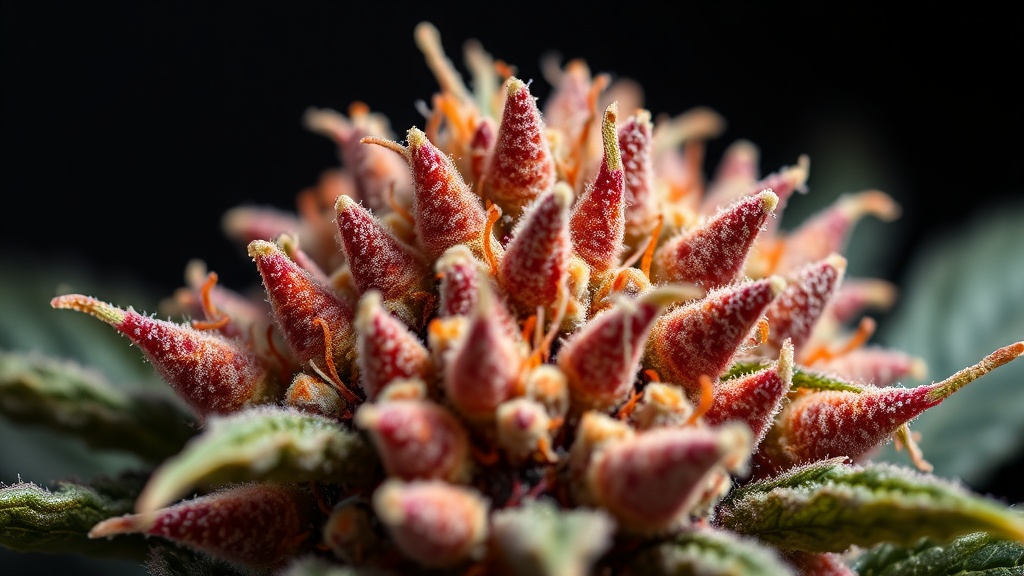
Flowering kicks off reliably at 12/12. By week 5–6, you'll see the characteristic dense, resin-coated buds forming with hints of purple in the calyx if nighttime temps drop below 65°F (18°C). This cold-induced anthocyanin expression is where Rainbow earns its name — green, purple, and orange pistil colors create genuinely photogenic buds.
Maintain relative humidity below 45% in the last 3 weeks to prevent botrytis on the dense colas. Airflow is critical — Rainbow's bud density is both a yield advantage and a mold risk if humidity climbs.
Harvest Timing
For the fullest terpene expression and balanced effect (euphoric + relaxing), harvest when 70–80% of trichomes are cloudy with 10–20% amber. Earlier amber ratios push toward more cerebral effects; higher amber produces heavier sedation. Use a jeweler's loupe (60x) or a digital microscope for reliable trichome assessment. Our trichome harvest guide covers the full visual breakdown.
After harvest, dry slowly at 60°F / 60% RH for 10–14 days, then cure in sealed jars for at least 4 weeks. The terpene complexity in Rainbow rewards a patient cure — week 6 jars smell noticeably richer than week 2. Use our Dry & Cure Timer to track your schedule precisely.
Want to estimate what your grow will produce before you even start? Run the numbers with our Yield Calculator.
Rainbow Strain vs. Similar Strains
Rainbow occupies similar territory to several other popular fruity hybrids. Here's how it stacks up:
- vs. Gelato — Gelato is creamier and more indica-leaning at higher doses. Rainbow has more tropical fruit brightness and a longer euphoric phase.
- vs. Purple Punch — Purple Punch is heavier and more sedating. Rainbow is better for daytime or early evening; Purple Punch is a true nighttime strain.
- vs. Blue Dream — Blue Dream is more energizing and sativa-forward. Rainbow is mellower and sweeter, with more body weight.
- vs. RS11 — RS11 is essentially Rainbow Sherbet #11, a premium phenotype of the same genetic pool. Expect higher terpene density and stronger potency, but also higher price and lower availability.
Use the Strain Comparator to run a side-by-side comparison with any of these — effects, terpenes, THC%, and grow difficulty all in one view.
Who Is the Rainbow Strain Best For?
Rainbow is a great match if you:
- Want outstanding flavor without sacrificing potency
- Prefer balanced hybrid effects that don't lock you down early
- Are a home grower looking for a colorful, visually rewarding cultivar
- Use cannabis for stress, mild anxiety, or mood support during afternoon/evening hours
- Are buying at a dispensary and want something photogenic and crowd-pleasing for a social setting
It's less ideal for users who need extreme sedation for sleep disorders, or those chasing maximum raw THC output above all else. For highly targeted needs, our Strain Finder Quiz will match you to the best strain based on your specific preferences and experience level.
Final Verdict
The Rainbow strain earns its reputation through consistency: reliably flavorful, reliably beautiful, and reliably enjoyable for a wide range of cannabis users. At 18–24% THC, a myrcene-caryophyllene-limonene terpene backbone, and balanced hybrid effects that blend euphoria with physical ease, it's the kind of strain that works as a daily driver without getting boring. Growers get a moderately demanding but visually rewarding cultivation experience with solid yield potential and outstanding bag appeal. Whether you're buying a eighth or building a grow around it, Rainbow delivers across the board.
More from StrainGuide
Community Grows
See how real growers are cultivating this strain.
Track Your Grow with GrowGuide
Free grow journal app — log feedings, track stages, snap progress photos, and connect with growers.
Get GrowGuide FreeHave a question about this topic?
Ask our AI Bud Tender — powered by the same assistant in the StrainGuide app.