Purple Haze Strain: Effects, 22–24% THC & Grow Guide (2026)
TL;DR — Purple Haze at a Glance
- Type: Sativa-dominant hybrid (~85% sativa / 15% indica)
- THC: 17–22% | CBD: <1%
- Effects: Euphoric, creative, energetic, cerebral
- Flavors: Sweet berries, earthy spice, grape
- Terpenes: Terpinolene, myrcene, ocimene, caryophyllene
- Flowering time: 8–9 weeks indoors
- Best for: Daytime use, creative work, social sessions
What Is Purple Haze?
Purple Haze is one of the most iconic cannabis strains ever cultivated — a sativa-dominant classic that has shaped the culture, vocabulary, and genetics of modern cannabis. Named after Jimi Hendrix's 1967 psychedelic anthem, Purple Haze delivers a fast-acting, head-heavy euphoria that has kept it relevant for decades. In 2026, it remains a benchmark strain for sativa lovers and a reference point for breeders chasing bright, cerebral highs.
Its lineage traces back to Purple Thai (or Colombian landrace genetics, depending on the pheno) crossed with a Haze variety. The result is a strain that sits comfortably in the intersection of psychedelic energy and sweet berry flavor — approachable enough for casual users, complex enough to keep connoisseurs coming back.
Purple Haze Terpene Profile
The terpene makeup of Purple Haze is what separates it from generic berry strains. It leads with terpinolene — a terpene associated with uplifting, slightly floral energy — followed by myrcene and ocimene. This combination produces the trademark sweet-spicy-earthy nose and drives the creative, almost psychedelic mental effect. For a deeper dive into how terpenes shape your experience, check out our Complete Guide to Cannabis Terpenes or explore profiles interactively at the Terpene Explorer.
Effects and Experience
Purple Haze hits fast — most users report onset within 2–4 minutes of inhalation. The initial wave is a sharp, buzzy head rush that quickly mellows into sustained creative energy. It's not a racy, anxiety-prone sativa; the myrcene content softens the edges enough to keep things smooth. Expect:
- Euphoria: Pronounced, mood-lifting — genuine happiness, not sedation
- Creativity: Associative, free-flowing thought — excellent for art, writing, music
- Energy: Moderate physical stimulation without jitteriness
- Sensory enhancement: Colors appear brighter, music sounds fuller — the "psychedelic" quality referenced in the name
- Duration: 2–3 hours for most users at standard doses
Potential downsides at high doses include mild paranoia and dry eyes/mouth. Purple Haze is overwhelmingly a daytime strain — avoid it close to bedtime. If you're newer to sativas and want to find the right match for your tolerance, try our Strain Finder Quiz.
Flavor and Aroma
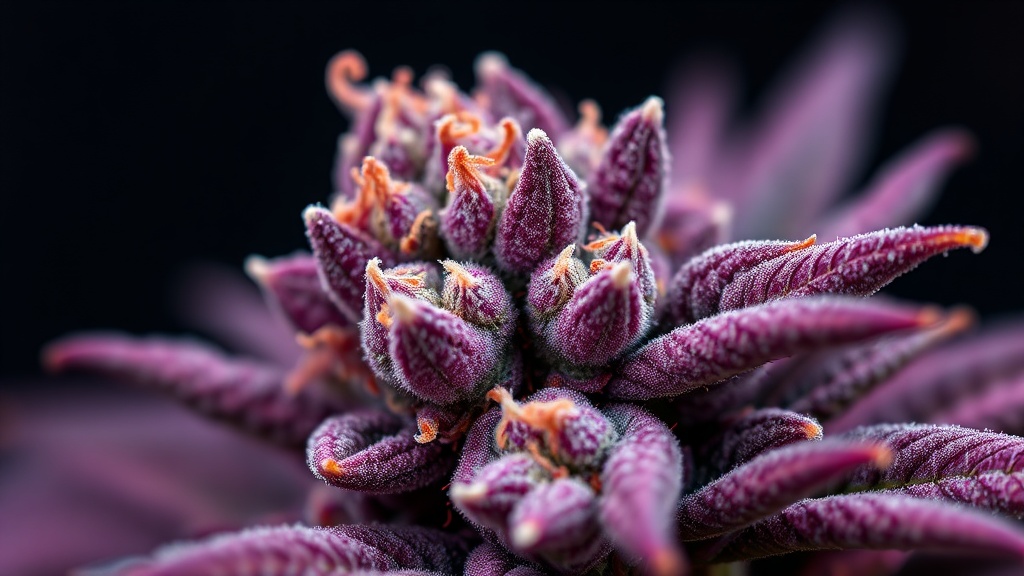
The smell of Purple Haze is unmistakable: sweet, slightly fermented grape up front, followed by a spiced earthy backdrop that anchors it in classic Haze genetics. On the exhale, users get a smooth berry sweetness with a hint of floral spice — not as candy-like as modern dessert strains, but far more complex. The color, when grown properly under cooler temperatures, ranges from deep forest green to vivid purple in the sugar leaves and calyxes — visually striking and easy to identify on a shelf.
If you're drawn to the visual and flavor complexity of purple strains, also check out our guide to Blue Cannabis Strains and the Purple Lemonade strain guide for related options in the purple family.
Purple Haze Genetics and History
Purple Haze's exact lineage has been debated for decades. The most widely accepted account credits Haze Brothers in Santa Cruz, California during the late 1960s and early 1970s, with genetics sourced from Colombian, Mexican, Thai, and South Indian landraces. The "purple" element is typically attributed to a Purple Thai or Colombian Purple cross that introduced the anthocyanin expression responsible for the strain's signature coloring.
By the 1980s, Sam "The Skunkman" (David Watson) reportedly carried Haze seeds to the Netherlands, where Dutch breeders like Nevil Schoenmakers worked with the genetics extensively. This is how Purple Haze entered the commercial European seed market and subsequently became the template for dozens of modern sativa-leaning hybrids.
Today, Purple Haze has contributed its genetics to popular modern crosses. It's worth comparing it to other landmark genetics using our Strain Comparator — especially if you're trying to understand how it stacks up against contemporary sativas.
Growing Purple Haze: Key Facts
Basic Growing Parameters
| Parameter | Indoor | Outdoor |
|---|---|---|
| Flowering time | 8–9 weeks | Late September – mid-October |
| Plant height | 90–130 cm (trained) | Up to 200 cm |
| Yield (indoor) | 400–500 g/m² | 500–700 g/plant |
| Difficulty | Moderate | Moderate |
| Climate | 68–80°F (20–27°C) | Mediterranean / warm temperate |
| Humidity (flowering) | 40–50% RH | Low humidity preferred |
Training and Structure
Purple Haze grows with true sativa structure: long internodal spacing, narrow leaves, and vigorous vertical stretch — expect a 2–3x stretch during the first 3 weeks of flower. Top early (at node 4–5) and implement LST or a SCROG net to manage canopy height and improve light penetration to lower bud sites. If you're growing indoors, flip to 12/12 when plants are about 40% of your target height. Our guide on how to top cannabis plants multiple times covers exactly when and how to apply this to sativa-dominant strains.
Outdoors, Purple Haze thrives in a warm, sunny climate with long summers. It doesn't love excessive humidity during late flower — keep airflow strong and watch for botrytis in dense colas. Use our Yield Calculator to estimate your expected harvest based on your specific setup.
Nutrients and Feeding
As a sativa, Purple Haze is a moderate-to-heavy feeder with a preference for higher nitrogen levels in veg and a steady phosphorus/potassium ramp through flower. Keep EC between 1.4–1.8 in veg and 1.6–2.0 in flower (hydro). In soil, standard 3-part feeds work well. Flush for 10–14 days before harvest to preserve the delicate terpene profile. If your plants show any yellowing or discoloration mid-grow, use our Nutrient Deficiency Identifier to diagnose the problem fast.
Try the Nutrient Deficiency Identifier →
Harvesting Purple Haze
For maximum terpene expression, harvest when 10–15% of trichomes have turned amber, with the majority milky white. Harvesting too early yields an overly racy, anxious high — too late and you lose the bright cerebral character that defines this strain. Check our trichome harvest guide for a detailed walkthrough. After harvest, a proper dry and cure is critical for Purple Haze — the floral terpenes are volatile. Target 10–14 days drying at 60°F / 60% RH, then jar-cure for a minimum of 3 weeks. Track your schedule with the Dry & Cure Timer.
Purple Haze vs. Similar Strains
Trying to decide if Purple Haze is the right sativa for you? Here's how it compares to close relatives:
- Purple Haze vs. Super Silver Haze: SSH is longer-flowering (10–11 weeks) and slightly more potent. Purple Haze is more approachable and finishes faster.
- Purple Haze vs. Durban Poison: Durban is cleaner, more functional, less psychedelic. Purple Haze has more sensory depth and body warmth.
- Purple Haze vs. Amnesia Haze: Amnesia Haze hits harder (22–24% THC), is more disorienting, and takes up to 13 weeks. Purple Haze is the gentler, more creative option.
Use the Strain Comparator to run a side-by-side of any of these options with Purple Haze before you commit to a purchase or grow.
Who Should Grow or Use Purple Haze in 2026?
Purple Haze is ideal for:
- Sativa enthusiasts who want classic genetics without chasing obscure cuts
- Daytime users who need creative stimulation without sedation
- Home growers with 8–10 weeks of indoor flower time available
- Anyone building a genetics library — Purple Haze is historically relevant and still commercially available from reputable seed banks
It's less suited for users prone to anxiety or paranoia, evening/nighttime use, or growers with limited vertical space who aren't willing to train aggressively. If you're looking for something with a similar creative lift but more manageable structure, consider exploring our Agent Orange strain guide as an alternative sativa-dominant option.
Final Verdict
In 2026, Purple Haze still earns its place as one of the best pure-sativa experiences available. It's not the highest-THC strain on the market, and it doesn't pretend to be. What it offers is something harder to engineer: a genuine, psychedelic-adjacent euphoria, a terpene profile that's both beautiful and functional, and genetics stable enough to grow predictably year after year. If you've never grown or smoked a true Haze, Purple Haze is the logical starting point — culturally essential, practically excellent, and still as alive as it was when Hendrix put it on the radio.
More from StrainGuide
Community Grows
See how real growers are cultivating this strain.
Track Your Grow with GrowGuide
Free grow journal app — log feedings, track stages, snap progress photos, and connect with growers.
Get GrowGuide FreeHave a question about this topic?
Ask our AI Bud Tender — powered by the same assistant in the StrainGuide app.